
Week 17: Numbered, Numbered, Weighed, & Divided
WEEK 17 | Daniel 5:24-31
Days 1-2 Deeper Daniel Father, open my eyes to see the truth in Your Word that I may know and love you more deeply.
If you have been following our little jaunt into King Hezekiah’s life for the past two weeks, we started with his prideful end and then read his faithful beginnings. The purpose of reading his life out of order was to provoke us to ponder how does a person of faith live faithfully to the finish? But on the flip side, what might keep a person of faith from living faithfully to the finish? Keep those two questions in mind while you do some research on the middle of Hezekiah’s life. Because the historical context is a bit challenging, I am going to send you to a commentary that will help you process those two questions. The Scripture is included with the commentary, but you may want to write some notes in your Bible as you read along. Go to enduringword.com. Select in the drop-down boxes 2 Kings 18. We already read verses 1-8 last week so you can start with 2 Kings 18:9 if you prefer. Then continue through 2 Kings 19 as well.
1. 2 Kings 18-19
Where do you see Hezekiah showing faith in God and leading the people to do the same?
Where do you see Hezekiah in fear putting his faith elsewhere and jeopardizing his people?
2. How do you see God remaining faithful?
To Hezekiah?
To Judah?
To His glory?
3. First, we read of Hezekiah’s end. Your perception of him then may have been “He idolized his wealth and esteems himself.” Then reading the beginning of his reign, you may have been shocked to read that he actually destroyed idols and re-established covenantal worship. Now having read the middle challenges of his reign, let’s process why Hezekiah showed the Babylon envoys the wealth at his disposal. Why after God graciously defeated the Assyrians for him, did Hezekiah graciously open the door to Judah’s future defeaters? Why after God moved the sun backwards for him, do we not see Hezekiah praising the Creator of the sun to the sun-idolizing Babylonians? Why after God graciously extended his life, did Hezekiah not weep that thousands of Israelites would now lose theirs?
Paul writes to the proud church at Corinth, “Therefore let anyone who thinks that he stands take heed lest he fall (1 Corinthians 10:12). Why do you think that Hezekiah fell?
If you want more to think about, go to enduringword.com again and read the commentary on 2 Kings 20.
Prayer – Throughout our DANIEL Faithful in Exile journey, we have continually revisited the pride of humanity. My prayer in studying Hezekiah is that we would see that ANYONE can fall into pride and that we would, in reverent fear, humble ourselves before our Father in heaven and ask Him to “lead us not into that temptation but deliver us [all of us together] from evil.” In his sermon on Daniel 5:1-12, Pastor Adrian provided a list of the ways pride can manifest itself. See it below and pray through each listed Scripture for yourself and for us at Grace Bible Church and Somos.
1. Arrogant|Proud (ὑπερήφανος – hyperēphanos)
Meaning: One who exalts himself above others; haughty. Used for people who lift themselves above God and others.
Example James 4:6 — “God opposes the proud, but gives grace to the humble.” Idea: Self-elevation that invites God’s opposition.
2. Boastful (ἀλαζών – alazōn) A braggart, someone who boasts about themselves.
Example 2 Timothy 3:2 — “People will be lovers of self, lovers of money, boastful, proud…” Idea: Self-promotion and self-glory.
3. Conceited / Empty Glory (κενοδοξία – kenodoxia) Vain glory, empty pride.
Example Philippians 2:3 — “Do nothing from selfish ambition or conceit…” Idea: Seeking recognition and honor that one does not deserve.
4. Self-Exalting (ὑψόω – hypsoō in reflexive use)
Meaning: To lift oneself up.
Example Luke 14:11 — “Everyone who exalts himself will be humbled.” Idea: Putting oneself above one’s rightful place.
5. Puffed Up (φυσιόω – physioō) Inflated, swollen with pride.
Example 1 Corinthians 8:1 — “Knowledge puffs up, but love builds up.” Idea: An inflated sense of self-importance.
6. Lovers of Self (φιλαυτία – philautia) Self-centered love.
Example 2 Timothy 3:2 — “People will be lovers of self…” Idea: Self as the center instead of God.
Days 3-5 Central Passage Father, open my eyes to see the truth in Your Word that I may know and love you more deeply.
....But you did not honor the God who holds in his hand your life and all your ways. 24 “Then from his presence the hand was sent, and this writing was inscribed. 25 And this is the writing that was inscribed: Mene, Mene, Tekel, and Parsin. 26 This is the interpretation of the matter: Mene, God has numbered the days of your kingdom and brought it to an end; 27 Tekel, you have been weighed in the balances and found wanting; 28 Peres, your kingdom is divided and given to the Medes and Persians.”
29 Then Belshazzar gave the command, and Daniel was clothed with purple, a chain of gold was put around his neck, and a proclamation was made about him, that he should be the third ruler in the kingdom.
30 That very night Belshazzar the Chaldean king was killed. 31And Darius the Mede received the kingdom, being about sixty-two years old. Daniel 5:24-31 ESV
OBSERVE DICTION
Ask: Which words/phrases might provide clues to the author’s message? What do they literally mean?
Ex. mene > corresponds to Hebrew word mane, which designates a measure of weight or money.
Ex. tekel > corresponds to Hebrew word shakal, which in the verb form means “to weigh.”
Ex. upharsin > has three parts: u is the conjunction and; then phars corresponds to the Hebrew word paras, which in the verb form means “to break in two or divide”; in is a suffix that makes this noun plural. We have a double word play because pharsin/paras also sounds like “Persians,” and the Medes-Persian army is at Belshazzar’s gate.
Tremper Longman III states that the most natural way to understand these nouns as a group is monetarily “a mina, a mina, a shekel and a half,” but Daniel interprets them as verbs (passive participles). Tanner points out that the key to understanding the significance of each of these nouns is that they sound like certain verbs. He gives the literal translation of the group as “numbered, numbered, weighed, and divided.”
OBSERVE DETAILS
Ask and answer simple w-questions: when? where? who? what? how?
What was Belshazzar’s sin?
What form of revelation did God choose to send him?
What was the writing that was inscribed?
What is the interpretation of mene?
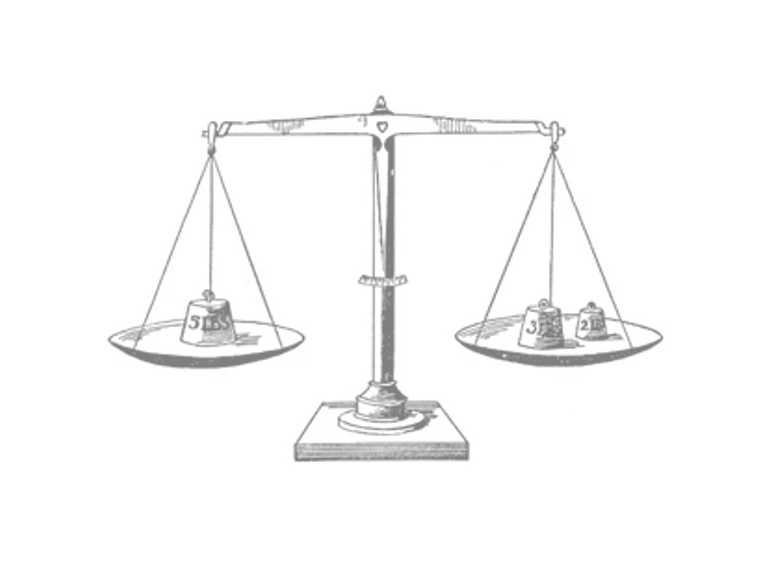
What is the interpretation of tekel?
The word “want” can also mean to fail to possess the required amount or to “fall short.” Consider that.
How would a balance scale in ancient times satisfy both the merchant and the buyer’s desire for justice?
What is the interpretation of parsin/peres?
Who numbered, weighed and found wanting and gave the kingdom to the Medes and Persians?
Read Daniel 5:17. Did Daniel desire to be rewarded for his interpretation?
We defined grace as “getting a good thing you do not deserve.” Did Belshazzar deserve an interpretation?
Did Belshazzar honor Daniel’s desire to give the interpretation as a gift of grace?
What happened to Belshazzar? Do we know any of the details about that?
What did Darius the Mede receive? How old was Darius when that happened?
Did God fulfill His Word? How quickly?
Historical Context – Daniel states, “this is the writing...Mene, Mene, Tekel, Parsin.” The Babylonian Talmud attests that in ancient times monetary weights were used metaphorically to capture a person’s character. In a Talmudic text quoted by Fruchtenbaum in his commentary Daniel, the character of a Jewish scholar weighed a mina while the character of a non-scholar only half a mina (192). The Bible also uses the metaphor of weighing a person’s character. Job 31:6 says, “Let Him weigh me with accurate scales, And let God know my integrity” (NASB). 1 Samuel 2:3 states, “Do not go on boasting so very proudly. Do not let arrogance come out of your mouth; For the LORD is a God of knowledge, and with Him actions are weighed” (NASB).
Babylon fell on October 12, 539 BC. None of the watchmen were in their normal positions that night of the feast. Ugbaru, Cyrus’ commander in chief, ordered the Euphrates River to be diverted to an old channel and this reduced the water level to be below the river gates. Their warriors were able, therefore, to wade in the lowered water and enter the city underneath the wall. Then under the cover of darkness, the city was taken without a fight.
OBSERVE STRUCTURE
Ask: Where does the passage shift in organizing its elements? What sign words are used? What repetitions?
Last semester we read about Joseph, another interpreter for a Gentile King. Joseph interprets that Pharaoh’s dream is repeated twice for this reason: “And the doubling of Pharaoh's dream means that the thing is fixed by God, and God will shortly bring it about” (Genesis 41:32). Consider that. What might be the purpose for God repeating mene twice?
Skim through the story in Daniel 5. We have a LOT of detail. Contrast that to verses 30-31. How does the abrupt shift to sketchy detail “match” the content of those last verses?
How to Read Your Bible –
narrator -- the person who tells the story that determines the point of view the reader will experience.
reticent -- to be reserved, willing to remain silent
The narrator biblical authors chose most often is the unnamed omniscient narrator. This narrator knows all because he can go with any character anywhere and he knows every characters’ mind and heart. He sees things from above, so to speak. Sound like Anyone you know? What is interesting about the omniscient narrator is that even though he can tell all, he chooses not to do so. In Scripture this narrator is typically reticent, and his silence often provokes questions in the reader. Some of these questions such as “How was Belshazzar killed?” or “How was Babylon defeated?” we cannot discern even with careful reading of the text. The reticent narrator simply chose not to tell us those details. What he did choose to tell us is that Belshazzar died that very night. So that “when” detail is what he wants us to ponder. Instead of details on Babylon’s defeat, our omniscient narrator only chose to give us “Darius the Mede received the kingdom” to ponder. We don’t even know who gave it to him. Or do we?...
So how does knowing this relate to how to read your Bible? Read your Bible knowing that its Author invites you to think and to engage in this exchange with Him. If He does not tell you a detail you want to know, review again the details He does want you to know with care. He’s telling you what’s most important to knowing His mind and heart.
INTERPRET
Ask: Why did the author choose to include these details and use these words?
1. As you read, consider how these prophetic texts help you understand God’s judgment of “Numbered, Numbered, Weighed, and Divided” upon Babylon. Write your PRAISE to the Omniscient Author of History for all He did & does.
o Jeremiah 27:6-8, which predicts that Nebuchadnezzar’s grandson will be the last king of the throne.
o Isaiah 21:1-5, which predicts that the Medes and Persians shall be Babylon’s conquerors.
o v2 Elam is an older name for Persia and Media is the land of the Medes.
o v3-4 Shows Isaiah’s reaction to what he is seeing, and v5 contrasts his pain to the oblivion of those feasting at the banquet the night of Babylon’s defeat.
o Isaiah 47, which lists the sins of Babylon and predicts her fall.
o Now consider all of Daniel 5 and the sparse detail God provides in verse 30-31 that records how He fulfilled His Word.
2. Go back to the Observe Diction, Details, and Structure sections. Consider these observations in your answers.
o How could Belshazzar’s choices and God’s responses to them serve as a warning to an unbeliever you love? Consider the biblical outworkings of grace and judgment you see in this story.
o How could Belshazzar’s choices and God’s responses to them serve as a warning to a believer you love whose heart is turned away from God? Consider the biblical outworkings of grace and judgment you see in this story.
For at one time you were darkness, but now you are light in the Lord. Walk as children of light 9 (for the fruit of light is found in all that is good and right and true), 10 and try to discern what is pleasing to the Lord. 11 Take no part in the unfruitful works of darkness, but instead expose them. 12 For it is shameful even to speak of the things that they do in secret. 13 But when anything is exposed by the light, it becomes visible, 14 for anything that becomes visible is light. Therefore it says: “Awake, O sleeper, and arise from the dead, and Christ will shine on you.”15 Look carefully then how you walk, not as unwise but as wise,16 making the best use of the time, because the days are evil.17 Therefore do not be foolish, but understand what the will of the Lord is. Ephesians 5:8-17 ESV
3. Underline what is true about the identity of each person in Christ and what God wants each person in Christ to do because He has given them a new identity.
Reflect on Daniel’s life in Babylon where he has served God from his youth until now about 81. How do we see him as light in this dark place and “making the best use of the time, because the days are evil” in his interactions with both Nebuchadnezzar and Belshazzar?
Historical Context – Remember Isaiah prophesied of Cyrus more than 150 years before he arrived. Darius the Mede “received” the kingdom from Cyrus the Great, and we will learn more about Darius in our next lesson. Cyrus would write a decree ordering that the Temple be built at his expense and constructed with detailed instructions. Every Jew would be permitted to return to Israel. Those who did return were encouraged to also contribute to the building of the Temple. And, finally, Cyrus ordered that all the vessels be returned to the Temple. Look at our God!
APPLY
1. How does this passage point to the Person and Work of Christ in some way? >>>How will you exalt Christ?
2. How does seeing Christ in this passage convict you? >>>What are you going to confess?
3. How can you apply this passage in such a way that you look more like Christ and bring glory to God? >>>What are you going to petition God to give you to yield to His rule in your life and to advance His kingdom?
Group Reflection Faithful in Exile
Triads & Quads Time – Get together with your prayer partners.
Directions – Share with your group one way you will apply what you learned. Then each person will pray for the person to their right to be faithful in their application and each person will pray for one of our church petitions below:
Prayer
Pray for our spiritual growth that the Lord would guard our hearts from being captivated by earthly power or wealth Ask Him to unmask every face of pride and strengthen us to seek Him daily and stand firm in steadfast love.
Pray for our people to love the lost and stir them to invite those who do not know Christ to come hear the good news on Easter Sunday. Pray the Holy Spirit would awaken the lost in our city and give them a desire to come on Easter Sunday and ears to hear the gospel.
Pray for the missionary your group adopted that God would provide all that is needed for them to be faithful to their calling and that He would ignite the Word they speak and live before those who need His salvation.
Pray for believers facing persecution around the world that God would protect them. Ask God to shield underground churches and secret meetings and keep His people safe from harm, violence, and arrest. Pray for God to be mightily present with those in chains and to help them bring glory to Him before their enemies. Petition our Father to grant the release of these brothers and sisters.
God’s joy & strength to you!